I Just Walked Across the Stage
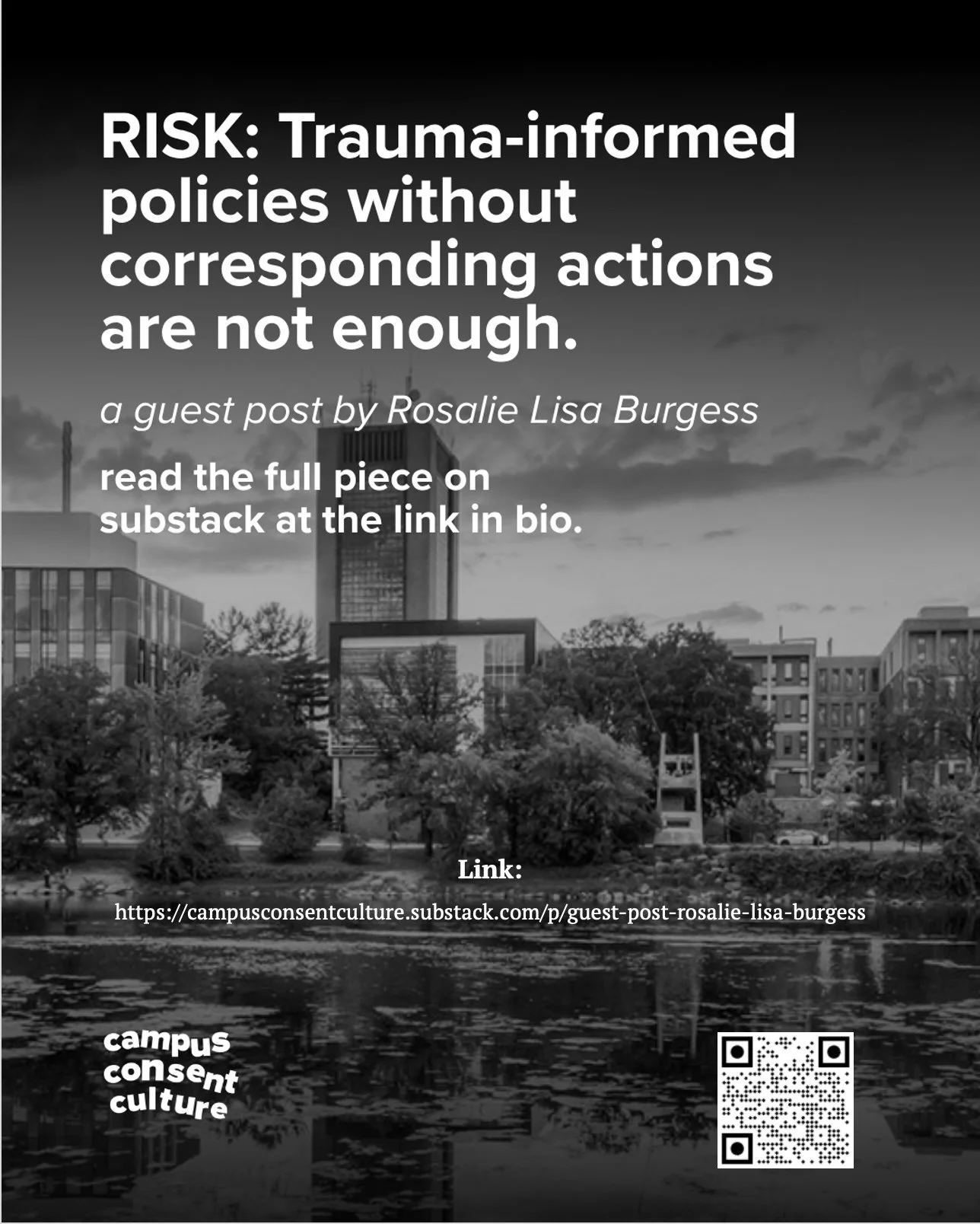
Burgess, R. L. (2026). RISK: Trauma-informed policies without corresponding actions are not enough.

Burgess, R. L. (2023). What is Forensic Entomology? QFSA.
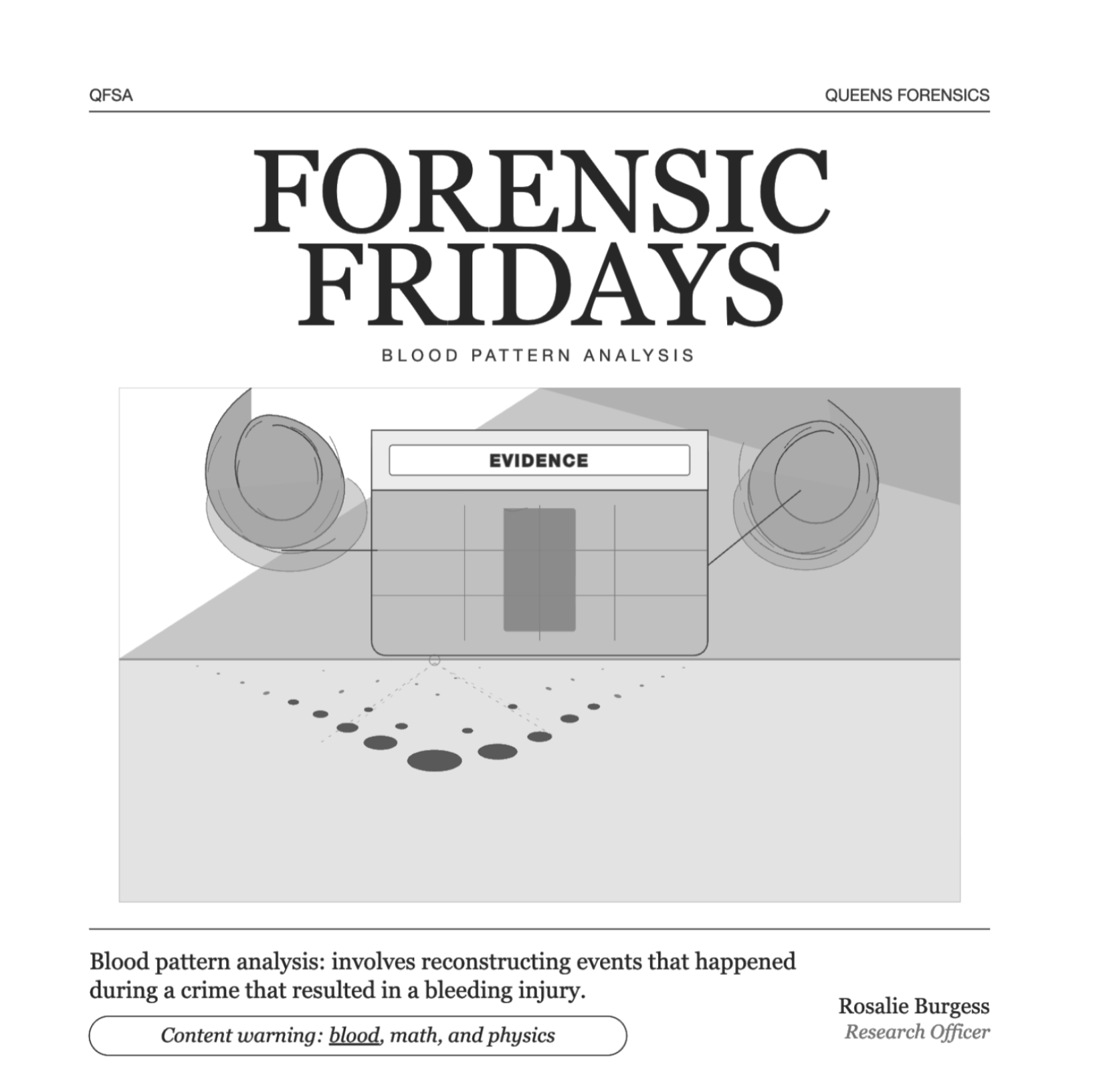
Burgess, R. L. (2023). Bloodstain Pattern Analysis (BPA). QFSA.
Blood Pattern Analysis (BPA): involves reconstructing events that happened during a crime that resulted in a bleeding injury.

Burgess, R. L. (2026). Smartphone Photoplethysmography as a Digital Stress Biomarker: A Laboratory Validation Study. Thesis.
The Human Factor: STRESS IS MORE THAN A SIGNAL. IT IS LIVED.
"Some days I feel overwhelmed for no clear reason.”
"I can function fine on the outside and still feel drained.”
"Numbers don’t always capture the weight I carry."

Burgess, R. L. (2018). Mens Rea and the Mentally Ill: A critical analysis. Robsoncrim.
A critical analysis of how criminal intent is defined and applied in cases involving mental illness. The paper questions whether existing legal standards adequately account for cognitive and psychological realities, highlighting gaps between doctrine and lived experience.
"The purpose of our criminal justice system is not only to administer punishments but also engage in active preventative measures to ensure the safety of the public. Unfortunately I cannot provide a concrete solution to ease the suffering of grieving victims. My best attempt to aid those in grievance would be to increase public awareness of mental disorders and better educate law enforcement personnel to prevent crimes in the first place. Until we as society can recognize that a disease of the mind is as adequate as a disease of the body, the ignorance of those who suffer will continue and impact the lives of everyone."
![Burgess, R. L., et al. (2026) Psychological responses to exercise intervention predicted from prior psychological profiles. PCYMH. [Conference].](https://images.squarespace-cdn.com/content/v1/69f7ffa3dca3417025866f1b/1780448934770-4UT5Q1S6Z0UI0UDAO15V/psychological_profiles_behavior.png)
Burgess, R. L., et al. (2026) Psychological responses to exercise intervention predicted from prior psychological profiles. PCYMH. [Conference].
This research examines how baseline psychological characteristics influence responses to exercise interventions. Findings suggest that individual differences play a significant role in behavioural and emotional outcomes, with implications for personalized approaches to mental health and physical activity.

Burgess, R. L. (2020) Work, Perception, and Neurodivergence. The Financial Diet.
A critical essay and career development tool on navigating professional environments as a neurodivergent individual. The piece examines workplace expectations, social dynamics (explicit or otherwise), and the often-unseen labour required to adapt within conventional structures.

Burgess, R. L. (2020). Scarcity, Rationalization, and Control. The Financial Diet.
A critical essay on the intersection of financial constraint and disordered eating. The article explores how harmful behaviours can be reframed as practical or necessary, revealing the underlying logic that sustains them.

The Charlatan & Doe, J. L. (2024). Community voices recommendations as Carleton reviews sexual violence policy
“A formal complaint was filed on my behalf without my knowledge or consent. The investigation was already underway. The respondent had been notified before I felt ready, before I felt safe, before I even understood my options. I only realized I had submitted a formal complaint after receiving the university’s letter—after the other party had already been notified.”
CKCU 93.1 FM Midweek March 18, 2026 | Winter 2026 - Episode 6
The process moved forward around me, not with me. I felt extremely unsafe; like my own university had put me at risk.
“First of all, it has to actually involve me, it can’t just leave me out completely. Second of all, it has to be a consent-based process. I need to consent to being involved, and to every step of it.”
“My consent wasn’t part of the process. The system moved forward without me. I wasn’t informed. I wasn’t asked. I wasn’t given a choice.”
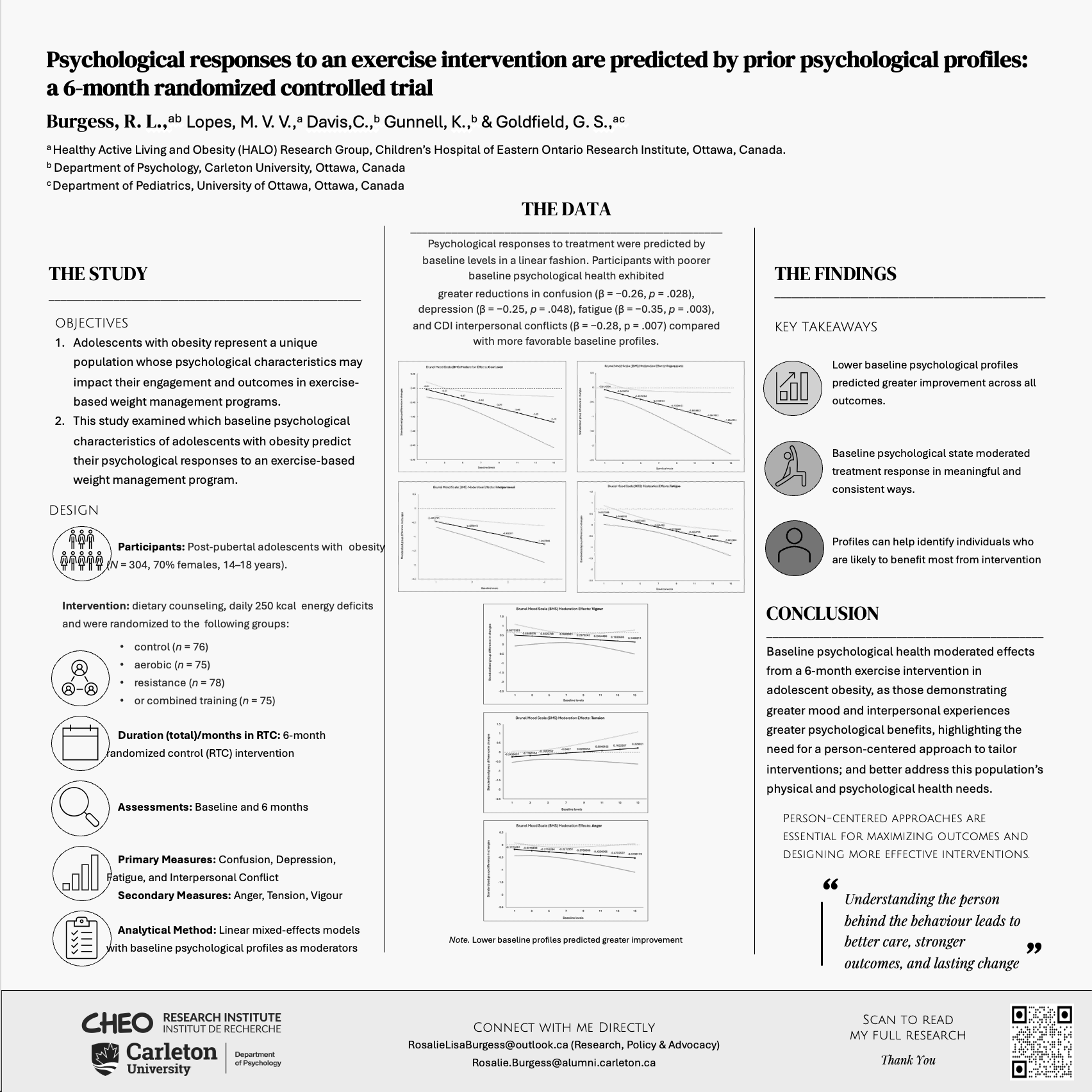
Burgess, R. L., et al. (2026). Psychological responses to an exercise intervention are predicted by prior psychological profiles: a 6-month randomized controlled trial
Burgess, R. L., et al. (2026). Psychological responses to an exercise intervention are predicted by prior psychological profiles: a 6-month randomized controlled trial. PCYMH 2026.
This research examines how baseline psychological characteristics influence responses to exercise interventions. Findings suggest that individual differences play a significant role in behavioural and emotional outcomes, with implications for personalized approaches to mental health and physical activity.

Burgess, R. L. (2020). What It’s Really Like To Navigate The Professional World With Autism: Career Education Essays and Confessions. The Financial Diet.
A critical essay and career development tool on navigating professional environments as a neurodivergent individual. The piece examines workplace expectations, social dynamics (explicit or otherwise), and the often-unseen labour required to adapt within conventional structures.
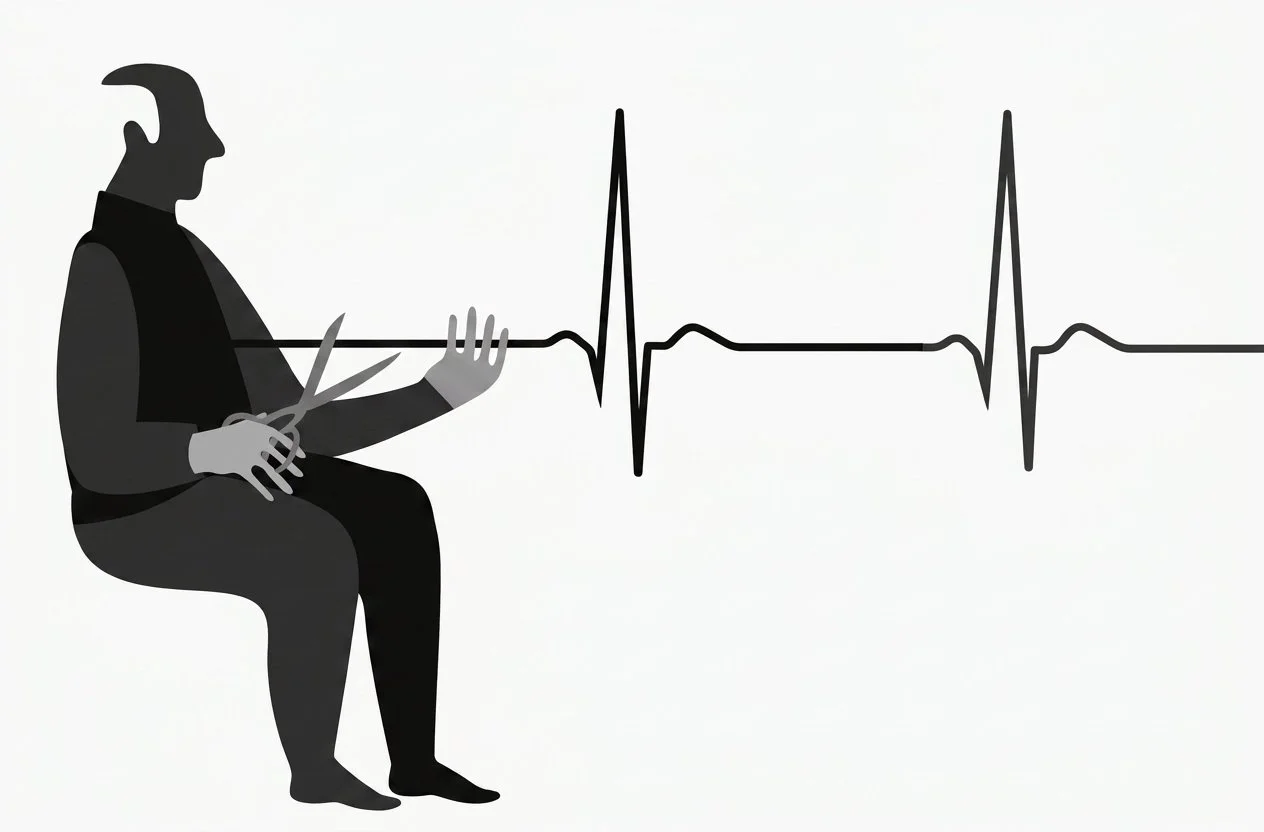
Burgess, R. L. (2018). Fighting for the Right to Die: Canada’s Battle for Physician-Assisted Dying
This paper examines Canada’s evolving legal framework surrounding physician-assisted dying, focusing on the tension between individual autonomy and institutional regulation. It reflects on how legal systems respond to complex ethical questions at the end of life.
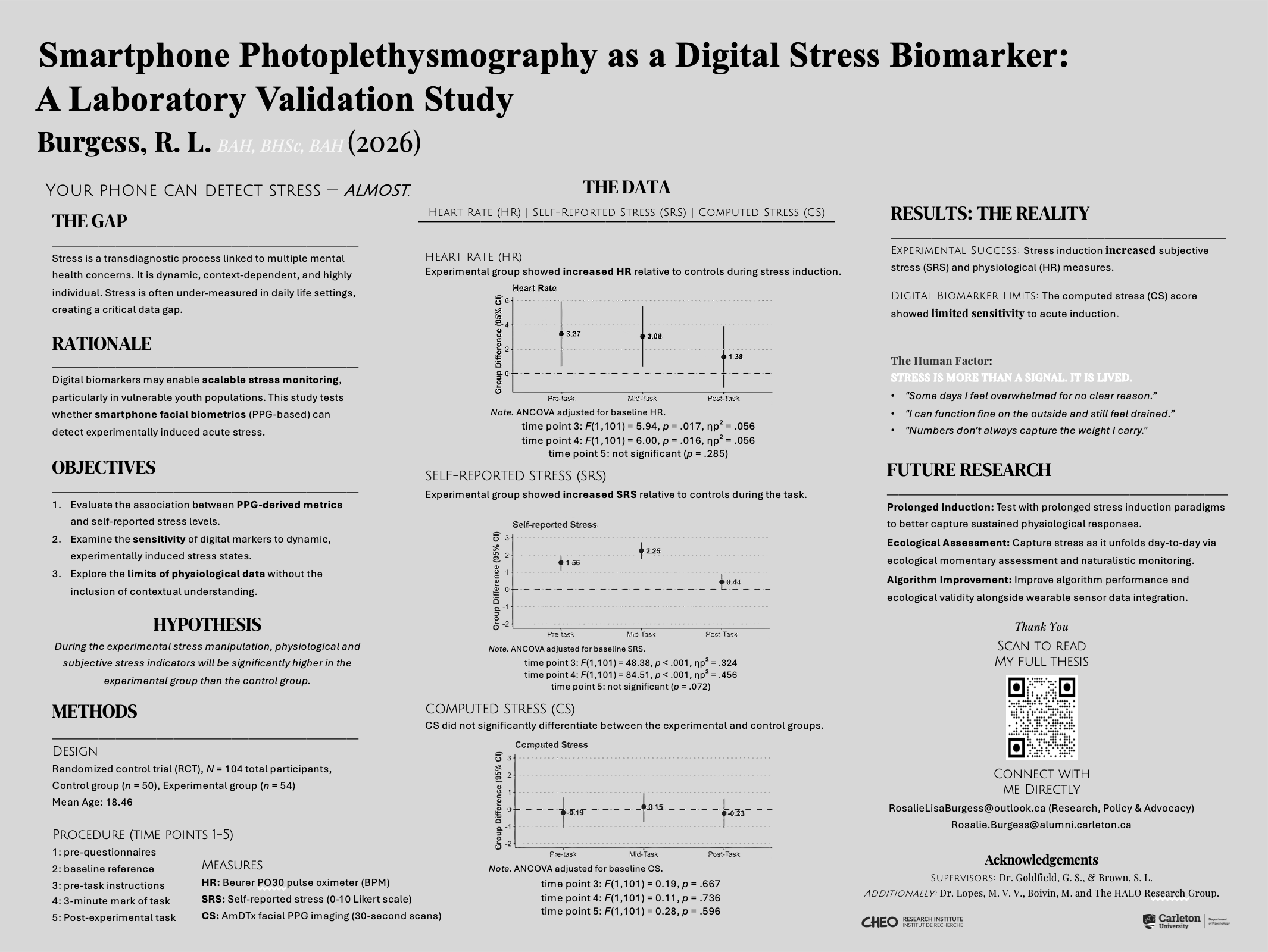
Burgess, R. L. (2026). Smartphone PPG as a Digital Stress Biomarker: A Laboratory Validation Study
Burgess, R. L. (2026). Smartphone Photoplethysmography as a Digital Stress Biomarker: A Laboratory Validation Study
Stress is a transdiagnostic process linked to multiple mental health concerns. It is dynamic, context-dependent, and highly individual. Stress is often under-measured in daily life settings, creating a critical data gap.
Digital biomarkers may enable scalable stress monitoring, particularly in vulnerable youth populations. This study tests whether smartphone facial biometrics (PPG-based) can detect experimentally induced acute stress.

Burgess, R. L. (2020). Scarcity, Rationalization, and Control. The Financial Diet.
A critical essay on the intersection of financial constraint in a post-secondary context. The article explores how harmful behaviours can be reframed as practical or necessary, revealing the underlying logic that sustains them and what can be done to improve gaps in care.

Burgess, R. L. (2018). Mens Rea and the Mentally Ill: A critical analysis.
A critical analysis of how criminal intent is defined and applied in cases involving mental illness. The paper questions whether existing legal standards adequately account for cognitive and psychological realities, highlighting gaps between doctrine and lived experience.
"The purpose of our criminal justice system is not only to administer punishments but also engage in active preventative measures to ensure the safety of the public. Unfortunately I cannot provide a concrete solution to ease the suffering of grieving victims. My best attempt to aid those in grievance would be to increase public awareness of mental disorders and better educate law enforcement personnel to prevent crimes in the first place. Until we as society can recognize that a disease of the mind is as adequate as a disease of the body, the ignorance of those who suffer will continue and impact the lives of everyone."

Burgess, R. L. (2026). Smartphone Photoplethysmography as a Digital Stress Biomarker: A Laboratory Validation Study
This research sought to validate smartphone photoplethysmography (PPG) as a non-invasive method for detecting digital biomarkers of stress. By validating biometric technology in a randomized controlled laboratory setting, I examined how accessible tools can be used to quantify and monitor stress responses with clinical relevance and validity.