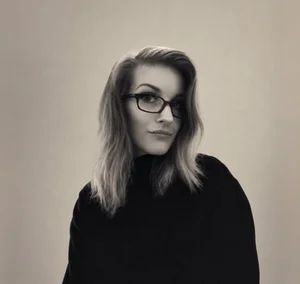
I Just Walked Across the Stage
By Rosalie Lisa Burgess
Today, I walked across the stage at Carleton University and collected a degree I was told, repeatedly and in writing, I would not be allowed to finish. My name is Rosalie Lisa Burgess. I hold a BHSc from Queen’s University, a BAH in Law from Carleton University, and, as of today, a BAH in Forensic Psychology, from Carleton University. I have three cats. I drink iced caramel macchiatos. I could be described as many words, however, at the end of the day, I am a human being who became an alleged victim of crime. I am telling you this because the people in that room today, including some who actively worked against my ability to graduate, are unlikely to tell you themselves. In 2024, I was sexually assaulted by an individual who held a position of authority over me at Carleton University (I will not include more identifying details than that here). I started classes two days later. I kept going, because I had no other option. What happened next is the subject of this piece, not because I want to relitigate it, or gather sympathy, but because it happened and it is documented.
the formal sexual violence complaint (I never filed).
In early September 2024, I received a letter from Carleton University’s Sexual Violence Review Committee (SVRC) informing me that my formal sexual violence complaint had been received and considered. I did not file that complaint. It was submitted on my behalf, without my knowledge, consent, or permission. By the time I found out, the process had already begun. The Committee acknowledged I had been excluded from deciding whether, how, and when I would be involved. The complaint was then suspended because of the concurrent police investigation, meaning the only practical outcome of filing it without my consent was that my assailant was notified before I had the information or the agency to respond. I became physically ill when I learned what had happened. I felt unsafe, not because of him in that moment, but because of my own university. Carleton’s Sexual Violence Policy (SVP) states clearly that only the complainant can choose to file a formal complaint, and that the complainant must be informed at least one business day before the respondent is notified. Two years later, that complaint remains unresolved; no process, no accountability, no apology. Not one.
my thesis.
In October 2024, I met with the Psychology Department to discuss my Honours Thesis application. Due to extreme extenuating circumstances occurring two days prior to commencing my psychology degree at Carleton University, I sought accommodations as a survivor of sexual violence, as per my rights, as a student at the university. I explained my circumstances at an initial meeting and received an email to follow up on that October 2024 meeting, where I was informed in writing that the department would grant me permission to apply, in light of my extreme extenuating circumstances, that were still ongoing, and that to proceed I would need to secure a faculty supervisor. I understood that requirement. I spent the next several months doing exactly that. By June 2025, I had secured not one but two supervisors. One agreed to serve as primary supervisor, and another as co-supervisor. The required form was signed and returned. Both supervisors had agreed enthusiastically. I had met every condition I was told I needed to meet. Then the goalposts moved; I could not proceed regardless of my supervisors. This had, apparently, always been the case. The Chair of Psychology himself directly emailed me saying: “At this point, there is no longer any chance you will be selected for a thesis. Thus, you should register for the Project course.” The Associate Dean of FASS reviewed my case and sided with the department. In doing so, he described the exception I had been granted, the accommodation I had relied on for eight months, as: “actually a big concession.” A concession, a favour, a discretionary allowance, rather than recognition of legitimate need. I filed a formal petition in June of 2025. I submitted details and extensive documentation inclusive of letters of support from the University Ombudsperson, the Paul Menton Centre (PMC) for Students with Disabilities and the Department of Equity, and Inclusive Communities (EIC). In August 2025, the Provost ruled in my favour. She found that the October 2024 follow up up email could reasonably be interpreted as signalling that the only remaining requirement was securing supervision, and that I had done exactly that. She found the reversal reflected “confusing messaging from the Department.” She granted me permission to register in the Honours thesis. I have since completed my undergraduate honours thesis in forensic psychology. I received a final grade of A. I am thankful for the decision and finishing my thesis, however, I wish there was more accountability for what it cost me to fight for this
the room I just left.
Graduation ceremonies are meant to be celebrations. Mine was something else: a room full of people I had to get through, rather than people who showed up for me. The faculty who made the last two years harder than it needed to be. I am not writing this from bitterness. I am writing it because I have watched institutions mistake procedure for protection, language for care, and silence for resolution. I want to put on record, in my own words, what that looks like from the inside. It looks like a 28-year-old woman crossing a stage alone, in a room full of people who made completing her degree a war, having received no apology from any of them. Yesterday, one day before my graduation and the day before I had planned to publish this, I was served with a subpoena in the criminal case against the man who assaulted me. I have been ordered to appear; that is what was waiting for me the day before my graduation, which I was not expecting. It also looks like a complaint still sitting open in a university office two years after it was filed without my knowledge. I am not asking this university to retroactively fix what happened to me. I am past the point where that would mean much. What I am asking for, and what I am building toward through my research, writing, and consulting, is this: Survivor-centred policies must mean more than survivor-centred language. Consent cannot be optional in a consent-based process. When an institution waives a requirement in recognition of a student’s extenuating circumstances, it assumes a heightened responsibility to communicate clearly, especially when those circumstances are ongoing. Accommodations are not concessions. They are not favours. They are the difference between a student continuing with dignity and being forced to carry more than one person should. I hope, one day, to stand alongside police in advocacy campaigns about the importance of reporting, because I know what it feels like when the clock starts moving before you are ready, and I know what that costs. I am publishing this today because today is the day I was told I might not reach. The people in that room do not get to write the ending. Somewhere, right now, a student is navigating a process she did not choose, in a language she did not consent to, toward an outcome decided before she had enough information to participate. This is for her. Your story matters, even if never spoken or if spoken in a whisper. I completed my thesis. I received an A an my thesis which I thought I would never have the equal opportunity to complete. I walked across the stage. The complaint is still open. I have not received an apology, from anyone. I am still here. This has been my own lived experience of sexual violence and the consequences that followed due to harmful institutional policies and the people who imposed them.
a final note.
I never aspired to put my story on paper, let alone let it bleed into the public realm. My words were meant to be a refuge, sporadic bursts of creative relief amid the demands of academic life. Writing this story, especially for the public, was never part of the plan. It was a reluctant detour, taken only because silence had been made too expensive. The absence of protection has left me haunted by questions: What lived in the hearts of those who turned away? How deeply must indifference take root for such brutality to slip so easily into shadow, unchallenged? So I am trying to make things better, because I cannot bear the thought that this is simply how it goes; because someone should have stood between harm and its aftermath; because someone should have said, clearly and without hesitation, this matters, she matters. If that did not happen for me, then let this be what I can offer now: a refusal to disappear, and a small light left on for whoever comes next.